
For paid search pros and the brands they work with

Ready to make pricing work on your landing page?

Here's how to handle the nine most common objections that keep pricing off the page.

Jump to the 9 objections
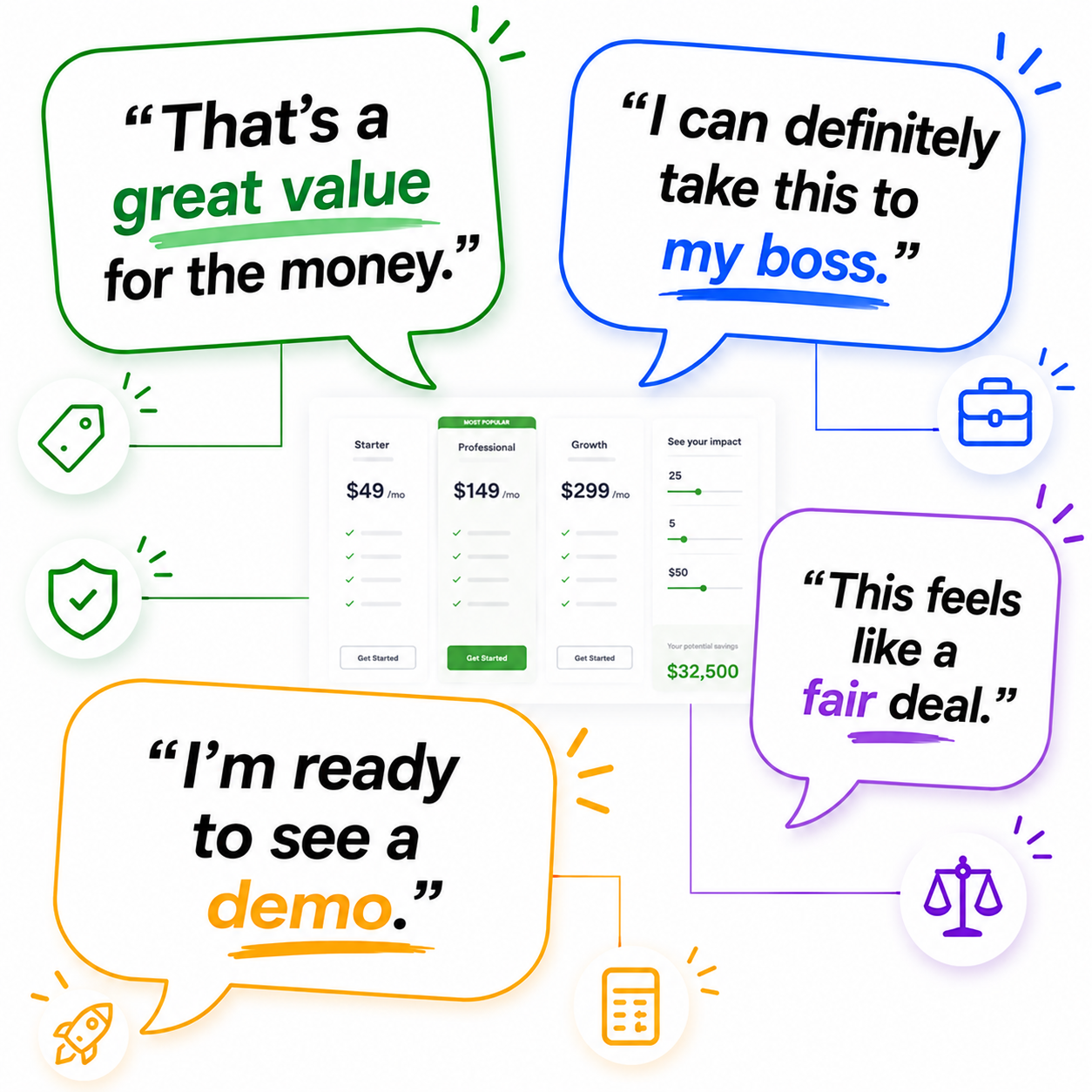
A pricing page surrounded by positive prospect reactions, including 'That's a great value for the money,' 'I'm ready to see a demo,' 'I can definitely take this to my boss,' and 'This feels like a fair deal'

The goal

The goal of a paid-search landing page is to get qualified visitors to say yes to the offer.

Product+Positioning+Price=Offer

Leave price undefined, and two problems show up on almost every paid-search landing page:

Unqualified leads slip through

They convert just to ask about pricing, taking up time that neither side will get back.

Ideal prospects bounce

They can't tell if your offer is for them, so they leave before you ever get a chance.

The tension

Pricing satisfies your visitors. It terrifies your stakeholders.

What visitors need

A visitor who just clicked your ad is trying to figure out if your offer is even in their universe. They are silently asking:

  1. 01What solution is this?
  2. 02Is it right for me?
  3. 03What results can I expect?
  4. 04What should something like this cost?

The core question

Is this for someone like me, and is it within reach?

You don't need a full rate card. But you do need to address that question.

All of this makes sense from the visitor's side. But for stakeholders, it's a harder sell. Service and lead-generation brands have good reasons to keep pricing off the page, and those reasons don't disappear just because the strategy is sound.

The nine fixes below are designed to handle the most common objections, so the landing page can do its job while the real fears get addressed.

§ The nine concerns

9 fixes for common pricing objections.

01

It's too complex or premium to price

Objection · 01

Our solution is too customized to list prices.

?Why it comes up

Custom work can vary a lot, and it's hard to offer a number that won't be misunderstood or create false expectations.

The fix

Provide sample packages, starting ranges, or common project types with ballpark figures to anchor expectations while staying flexible.

It builds clarity without locking you into a rigid quote, reducing confusion and filtering out poor-fit leads.

Objection · 02

We don't want to use 'starting at', it anchors too low.

?Why it comes up

You've likely had leads fixate on the lowest price and ignore the context or full value of what you offer.

The fix

Present typical investment ranges or showcase mid-tier options most clients choose, instead of entry-level prices.

Shifting focus from 'minimum cost' to 'typical investment' helps maintain perceived value while still offering clarity.

Objection · 03

Luxury brands don't show pricing, and we want to be premium.

?Why it comes up

Premium brands often build credibility through brand equity, so it's natural to want to align with that perception.

The fix

Highlight other premium signals (design, social proof, client logos) and consider sharing minimum project sizes or budgets to filter fit.

You still communicate selectivity and premium positioning while helping prospects assess whether they qualify.

02

Pricing gets in the way of the sales conversation

Objection · 04

We need to talk to them first to understand what they need.

?Why it comes up

You want to tailor the solution and ensure you're not oversimplifying or underrepresenting the value.

The fix

Use a quiz, calculator, or short form to guide users toward relevant pricing options before reaching out.

It keeps the interaction personal while giving prospects a preview of fit, saving time for both sides.

Objection · 05

We want a conversation, not to be seen as a commodity.

?Why it comes up

You want to be seen as a trusted advisor, not just a line item or vendor choice based on price.

The fix

Pair pricing ranges with context about what makes your solution unique or layered, reinforcing your value beyond price.

It sets expectations and shows confidence in your value, rather than relying on mystery as a selling tactic.

Objection · 06

Pricing is part of our consultative sales process.

?Why it comes up

You build trust through conversation and don't want to be ruled out before explaining the value.

The fix

Be intentional about when and where pricing appears. Place it further down the page, reveal it after a click, or continue on a follow-up page. Let them understand the “why” before the “how much.”

This maintains your positioning while giving motivated prospects the clarity they need. Sequencing pricing after benefits reduces sticker shock and reinforces value before cost becomes a filter.

03

Pricing exposes us to the wrong audience

Objection · 07

Competitors will see it.

?Why it comes up

No one wants to hand their pricing strategy to competitors who may undercut or try to mimic it.

The fix

Competitors will learn your pricing, whether from talking to shared prospects or secret shopping efforts. Accept this reality, and prioritize helping qualified prospects self-select with transparent ranges.

It prioritizes attracting the right-fit clients and saves your team from chasing dead-end leads.

Objection · 08

We change pricing often.

?Why it comes up

You don't want to publish pricing that might be out of date or lead to misunderstandings.

The fix

Show pricing ranges or minimums, and include a note about variability. Offer to send the latest version to interested leads.

It prevents confusion while still offering transparency. You're giving enough info to qualify leads without publishing final prices.

Objection · 09

If they're price-sensitive, they're not our customer.

?Why it comes up

You want to work with people who understand value, not bargain hunters who fixate on cost.

The fix

Use pricing as a filter: sharing ranges helps qualified buyers self-select and keeps your pipeline focused on the right fit.

It allows aligned prospects to move forward and filters out those who wouldn't be a good fit, saving everyone time.

Keep going

Make your landing pages work harder for paid search traffic.

Build offers and pages that pull the right people in and move them to act.